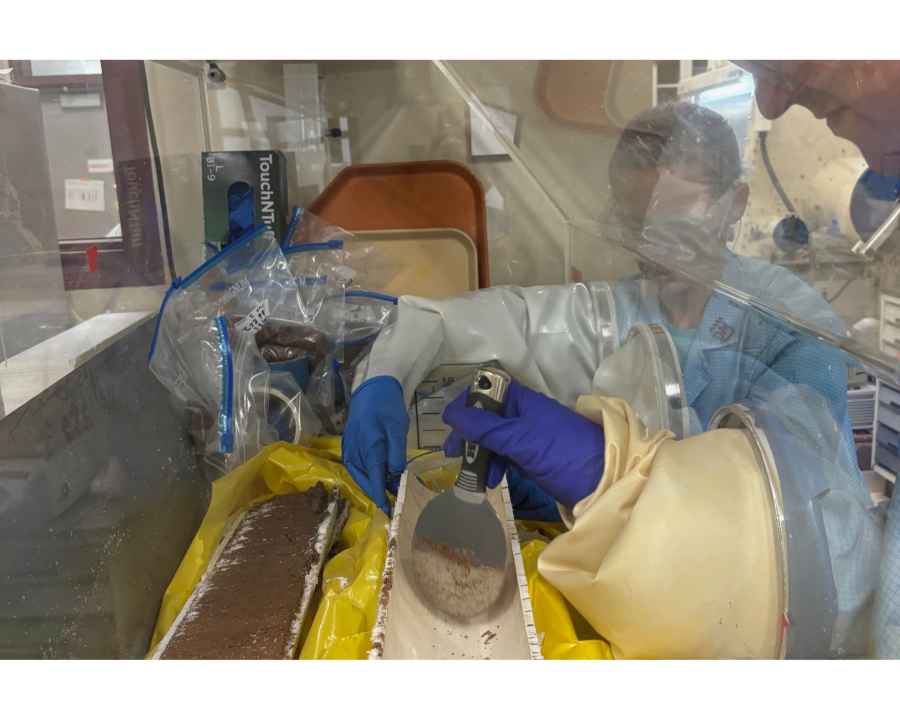
Scientists at the University of Manchester examine how crushed concrete interacts with Sr 90. (Photo: University of Manchester)
Researchers from the University of Manchester, the U.K. National Nuclear Laboratory, and Clemson University have studied using crushed concrete at legacy nuclear facilities as a long-term sink for strontium-90, a radioactive contaminant found at many such sites. Their research has been published in the American Chemical Society journal ACS ES&T Water.
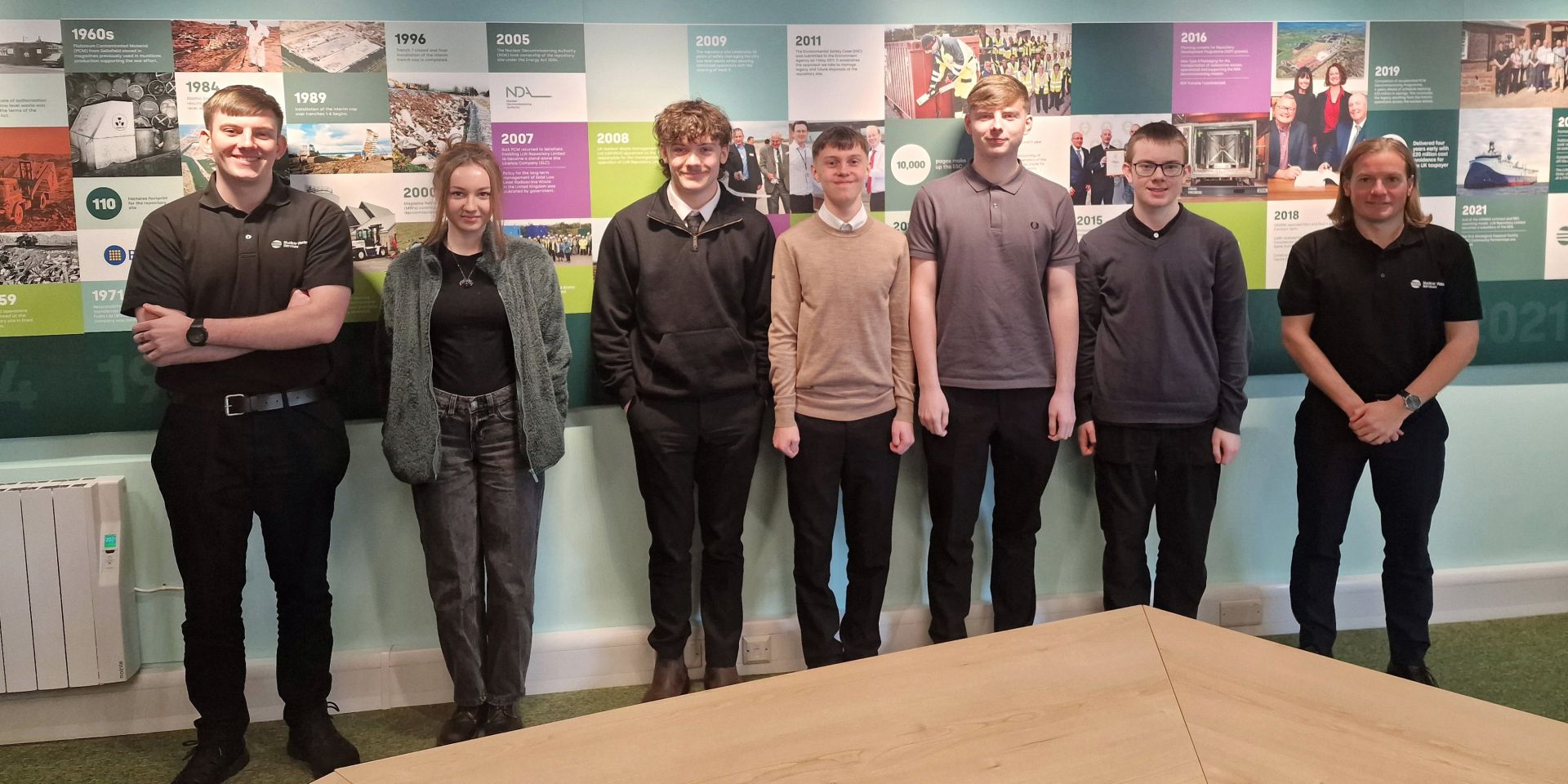
NWS scientific apprentice Teddy (left) and senior lead in customer management and expert support Howard (right) flank the five Dream Placement 2025 student participants. The students are (from left) Amelia, Elijah, Cole, Joseph, and Will. (Photo: NWS)
Earlier this year, Nuclear Waste Services, the radioactive waste management subsidiary of the U.K. Nuclear Decommissioning Authority, hosted a group of five teenagers for a week of exposure to real-world work environments at its facilities in Calderbridge, Cumbria. The students learned about career opportunities and leadership responsibilities at the company while they engaged with senior management and performed activities with several NWS teams, including employees in the environmental, waste characterization, cybersecurity, human resources, and geological disposal facility grants departments.
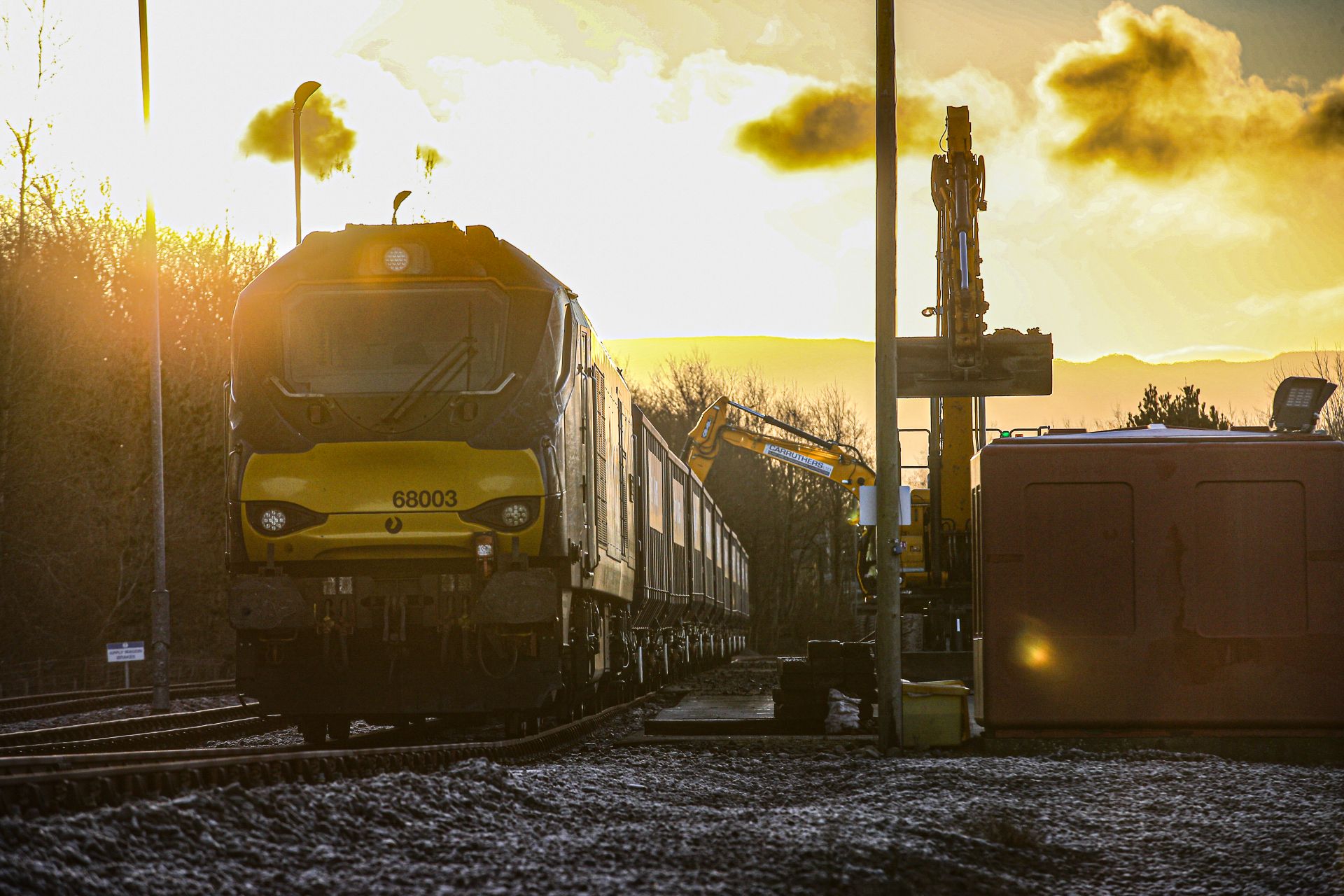
Aggregate is delivered by rail to the U.K.’s Low-Level Waste Repository site. (Photo: NWS)
Nuclear Waste Services (NWS), which manages the disposal of the United Kingdom’s low-level radioactive waste, announced this week that a major milestone has been reached at its Low Level Waste Repository in West Cumbria, England, as work begins on the final capping of legacy disposal trenches and vaults at the site.